
Cloud has changed the way we use technology, making it hard to ignore. From saving photos on Google Drive to businesses shifting their entire setup online, it’s everywhere now. Nowadays, cloud computing is no longer some fancy term—it has become part of daily life. You don’t need big machines or heavy setups anymore. Instead, just connect to the internet, and then you get the software, storage, or tools you need. And here’s the best part—while we use it in simple ways, the career side of Cloud Computing is Exploding with Fresh Jobs and Great Salaries.
What is Cloud Computing?
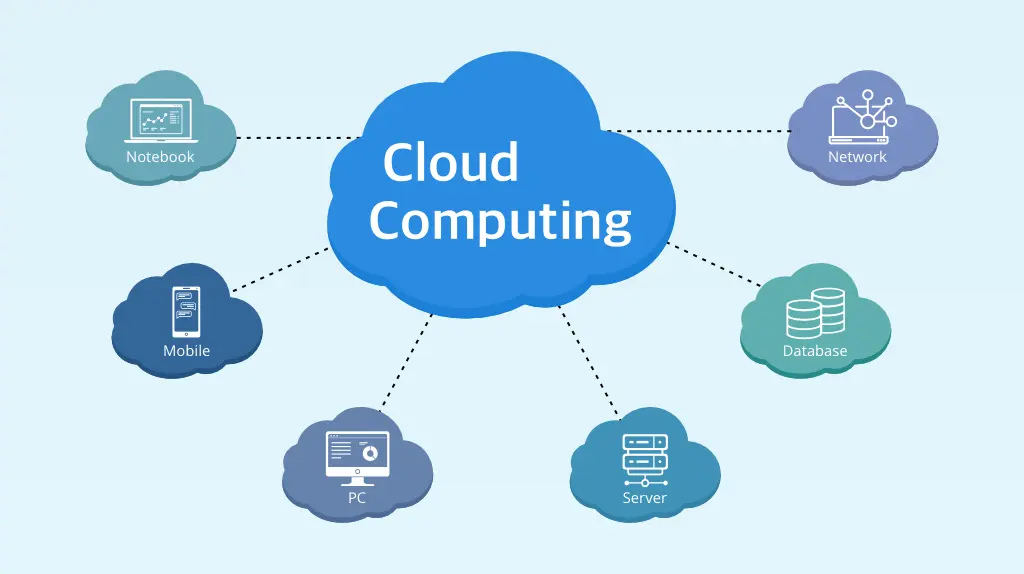
Simply put, cloud computing refers to the ability to access things such as a server, storage, software, or networking through the internet. Therefore, you don’t have to purchase heavy machinery in your office. Instead, you simply use software when you need it!
For example, think about email. You probably didn’t set up a huge server at your house to send an email, right? You logged in and it just worked. Similarly, that is how the cloud works—it enables you to have the tools without worrying about owning or running them. Moreover, for businesses, this often may mean spending less, getting things done faster, and scaling when demand increases.
Key Characteristics of Cloud Computing
Cloud computing is really taking off due to how it works. Below are some of the key features that make it very different:
1. On Demand Self-Service – Need more storage or computing power? You can get it instantly without waiting for approvals or needing to install large machines.
2. Broad Network Access – As long as you can get on the internet, you’ll be able to log in from a laptop, phone, or even a tablet. Cloud computing will not restrict you to one device.
3. Resource Pooling – Companies like Amazon, Microsoft, and Google have massive data centers, and they pool their resources for their users. This keeps things very efficient.
4. Rapid Elasticity – If there is a sudden surge in traffic–for example, during a sale around Christmas–businesses can immediately add resources, and if the traffic lightens, they can then scale back.
5. Measured Service -You pay for what you use. There are no extra costs if you are not using it, which is one reason most startups and companies find a cost efficient model.
These features illustrate why more and more companies are moving their systems and management to the cloud.
Benefits of Cloud Computing
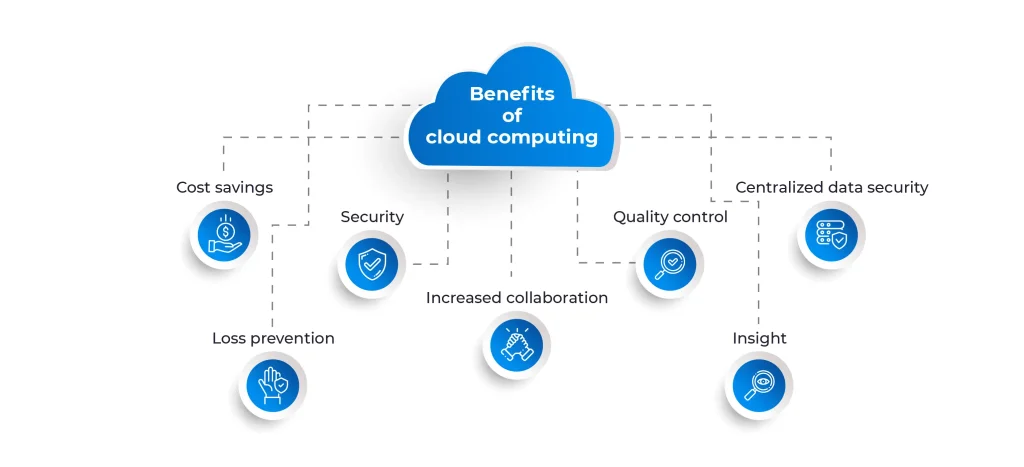
When most people think cloud they think saving money first. There are other benefits too. Here are some other reasons why businesses of all sizes are migrating to the cloud:
Flexibility: Companies can scale resources up and down at will. This means that a small online store can increase its services during Diwali sales and reduce after that without wasting any money.
Reduced spending: You no longer need to spend crores on servers and IT infrastructure. Pay only for what you use, and certainly not the huge capital entrance costs.
Security: Top cloud service providers have extensive security measures in place to protect your data; something a small business would find challenging to achieve.
Speed and Innovation: Testing a new application or rolling out a new feature is done faster. Cloud computing means businesses can experiment much faster and drop ideas much faster.
Global Access: Employees can login from anywhere; be it the office, home or thousands of miles away from their office.
Cloud computing is as viable for a company working out of a single room to a company with thousands of employees across the globe.
Cloud Hosting and Platforms
When it comes to hosting, companies are quickly selecting cloud hosting instead of standard hosting. Unlike single-server hosting, cloud hosting takes an organization’s resources and distributes them to numerous smaller servers. As a result, this offers better reliability and lowers the amount of downtime.
In fact, one of the most dominant global providers is Google Cloud Computing. Along with Microsoft Azure and Amazon Web Services (AWS), Google Cloud Computing supports businesses across various industries with secure, scalable cloud solutions.
Scope of Cloud Computing in Careers
The scope of cloud computing is enormous. Businesses in almost every sector require professionals who are proficient with cloud computing programs and tools. Because of that demand, cloud computing is a field with an incredible breadth of career choices that include:
Some of the key cloud computing roles include:
- Data Engineer with cloud experience
- Cloud Engineer
- Cloud Architect
- Cloud Security Consultant
- DevOps Engineer
You can find it in industries ranging from healthcare to banking to manufacturing to entertainment. The difficulty to fathom is that those industries require specialists and you’ve gotta hold your spot if you want to take advantage of a vast selection of steady, secure jobs.This program is designed for a wide group of learners:
Salary Trends in Cloud Computing
At this point, you’re probably wondering how much you can actually earn in cloud computing. Well, it all depends on how much experience you have, what skills you have acquired, and the nature of the projects you worked on. Even so, a beginner can start to earn a decent package if they have completed a few courses on cloud and gained experience through small projects. Furthermore, for those who have spent a year or two on the cloud, your earning potential could rise quite quickly.
| Experience Level | Salary in India (₹) | Salary Globally ($) |
| Entry-Level (0–2 yrs) | Around 5–7 LPA — most freshers begin small, working on basic tasks | About 60,000–75,000 a year — a fair start for beginners |
| Mid-Level (3–5 yrs) | Roughly 10–18 LPA — jumps once you’ve built some skills and real projects | Close to 90,000–120,000 — depends a lot on your role |
| Senior-Level (6–10 yrs) | Usually 20–30 LPA — handling big projects or guiding juniors | Between 130,000–160,000 — jobs like architect or security lead |
| Expert (10+ yrs) | 35 LPA or more — top people often manage teams and strategy | 170,000+ a year — senior experts at global firms take home this |
The opportunities are not only unique to India. In fact, many global companies are seeking cloud-aware practitioners across the globe digitally. Moreover, with remote work becoming quite common, you could be working for a global company while living in the same city where your daily commute is only 5 to 20 meters. In summary, the landscape is an excellent field where hard work and capability eventually translate into opportunities.
Learning Path: Why you should take the Henry Harvin Cloud Computing Course ?

Selecting the right course is the first step to a successful career. Therefore, if you want to build your career in cloud computing, making the right choice matters. You have several options. However, the Henry Harvin Cloud Computing Course is unique because of its focus on real-world, practical learning and career-oriented domain modules.
Henry Harvin Cloud Computing Program
The Advanced Certification in Cloud Computing and DevOps Program from Henry Harvin is one of the best programs available. It is good for freshers and IT professionals looking to improve their learning and job skills in cloud computing.
The course includes 168 hours of instructor-led training which is live instructor training and online which allows learners to interact with experienced trainers.
The course is delivered in 9 in 1, the components include training, practical internships, real life projects, certification, e-learning modules, competency in master classes, 1-year Gold Membership, hackathons, and placement support.
The modules include an introduction to cloud computing concepts, DevOps tools and principles, AWS training, virtualization and deployment models, and the foundations of cloud security. Moreover, learners also participate in hands-on projects and case studies. As a result, the certification is recognized and will help learners transition to a higher paying job in cloud computing.
Who Can Attend This Course?
This program is designed for a wide group of learners:
- Freelancers and consultants have the opportunity to expand their services by gaining cloud expertise.
- For Fresh Graduates, especially IT or CS students, it provides a path to launch a career in cloud.
- Developers, admins, and IT managers can benefit by upskilling through this program.
- Non-IT professionals looking to enter cloud-based roles will find this course very helpful.
- Entrepreneurs and business owners can use the training to implement cloud solutions and scale their operations.
Conclusion
The growth of cloud computing has, therefore, become the foundation for businesses and technology moving forward. Moreover, with its vast benefits and rising adoption rate, it provides unique opportunities for practitioners across the world. Consequently, we’ve seen an increase in salaries alongside a rise in demand across jobs in multiple industries.
For learners and practitioners, the Henry Harvin Cloud Course is, in fact, a guided path to mastering cloud computing. Thus, whenever you choose the best instruction and build in-demand skills, you can look forward to growth, stability, and success in your future career in the cloud industry.
Recommended Reads
- Top 30 Cloud Computing Interview Questions and Answers
- What is Hybrid Cloud? Benefits of Hybrid Cloud Adoption
- Top 10 Cloud Architect Courses in India
- Top 10 Applications of Cloud Computing you should know
- Advantages and Disadvantages of Cloud Computing
FAQ Section About Cloud Computing
Not really. Even small startups use cloud hosting so they don’t spend too much and can grow their business easily.
You need to learn a cloud platform, like AWS, Azure or Google Cloud, plus some DevOps skills and cloud security basics.
Yes, you can learn the fundamentals first, then work your way to an advanced cloud tools.
Yes, certifications will substantiate your skills and help you get a foot in the door for a new job.
You can be a cloud engineer, cloud architect, DevOps engineer or a cloud security specialist.