
The modern world demands daily updates for all things because everything needs transformation. The process of change management becomes challenging for organisations that operate in technology-based environments because not all teams can adapt successfully. The corporate sector requires an immediate resolution to this problem, as organisations that fail to innovate and adapt will lose their competitive position. Organisations need to make continuous adjustments to fulfil customer needs while supporting digital transformation and surpassing their market rivals. The process of change creates confusion, which makes opposition seem simpler to some people. The corporate world depends on change managers to lead successful organisational transformations that result in smooth transitions to new systems. The application process for this position remains challenging, so candidates need to prepare thoroughly for the change manager interview questions before their assessment.
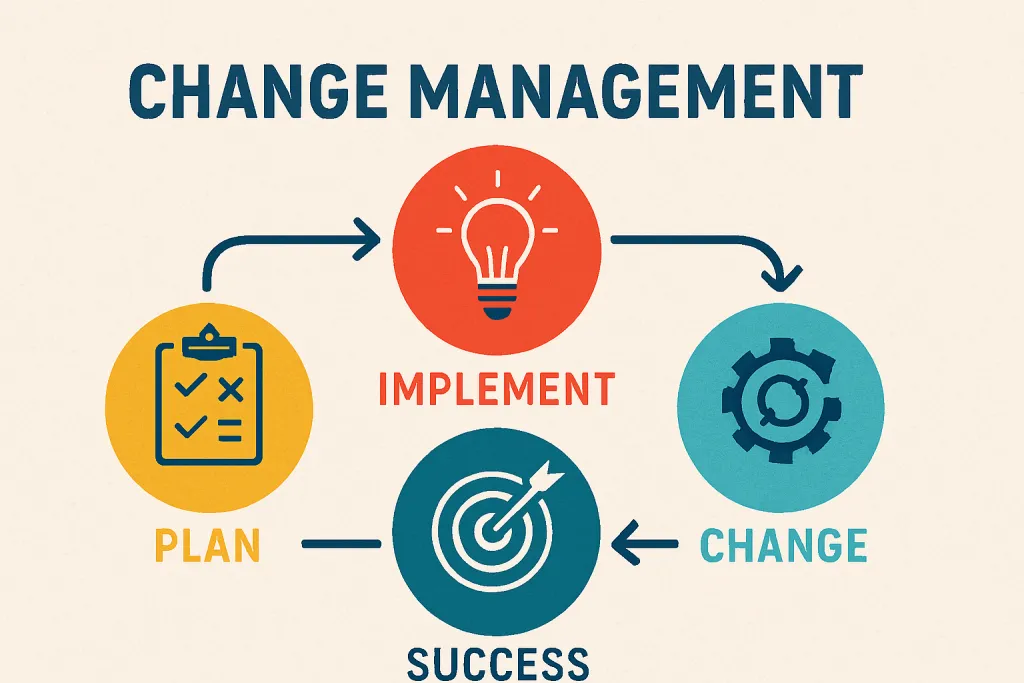
Your primary responsibility as a Change Management employee in any organisation should be to maintain leadership over your market competitors. Your responsibility includes predicting upcoming digital developments while ensuring your customers and staff members understand how to adapt to these changes. A successful change manager maintains open communication while creating strategic plans for seamless transitions and delivers innovation through complete analysis of essential factors. Your ability to handle technical and emotional aspects of change will minimise risks while boosting productivity, which leads to enduring business success. The following article provides essential guidance to help you succeed in your change manager interview questions and responses and meet the expectations of your interviewers.
What can you expect, and how can you meet the expectations in change manager interview questions?
The purpose of change manager interviews is to assess your ability to guide people and organisations through their processes during transformation initiatives. The assessment includes three types of questions which test your leadership abilities, your communication skills, and problem-solving competencies.
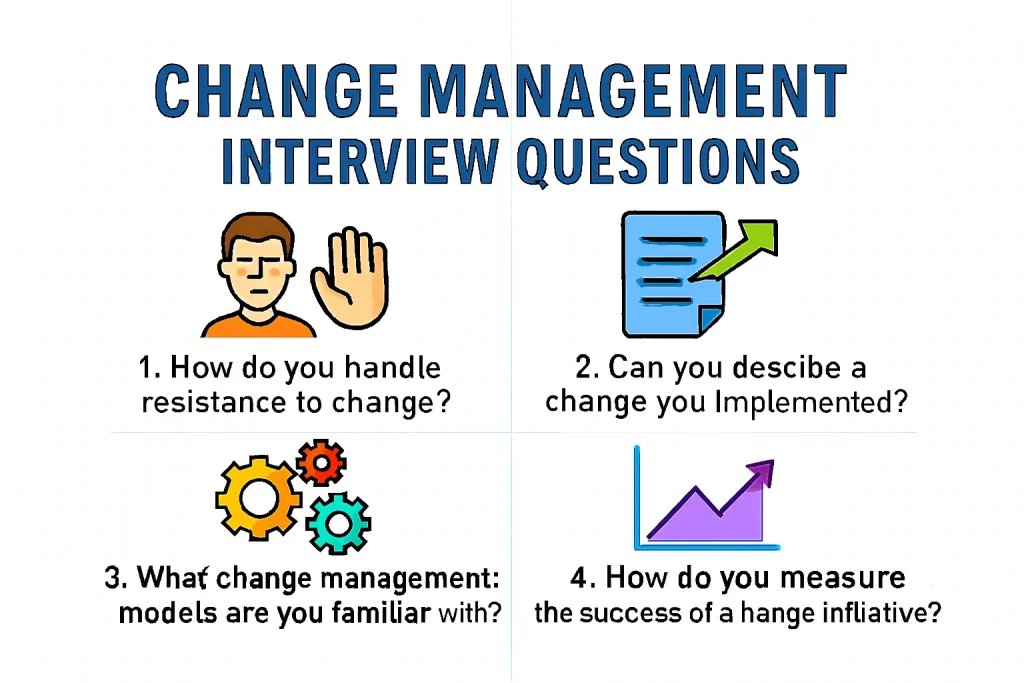
Your capacity to adapt and simplify complex changes leads to building trust with others. The interviewer will ask for particular metrics to evaluate success, so you should show your skills in tracking adoption rates, stakeholder involvement, and impact measurement. The assessment will evaluate your technical competencies together with your interpersonal abilities to determine your potential for leading organisational change initiatives. Additionally, some sample change manager interview questions would definitely help you understand interview scenarios better. The following 25 questions with answers span different levels of change management to assist your interview preparation. You can study these questions carefully to develop your best responses for your interview.
Level 1: Beginner’s change manager interview questions:
The following ten entry-level change manager interview questions with example responses will assist your preparation for your interview.
1. What is change management, and why is it significant?
Change Management is a structured method of managing the transition of people, teams, and organisations from their present state to their future target state. The process serves three critical functions by reducing opposition, creating efficient transitions, and boosting the chances of successful change implementation.
2. What approach do you use to inform team members about the need to start using a new process right away?
I would schedule an emergency team gathering to present the essential reasons for the immediate change, specify the required actions, and provide necessary resources for team members to transition effectively.
3. Share an instance when you faced difficulties in getting your team to accept a new operational procedure. What happened?
The team refused to adopt my proposed project tracking system because they wanted to keep their current workflow. The team started using the new tool after I provided training sessions, which demonstrated its benefits to them.
4. What particular metrics do you apply to assess the results of your introduced changes?
I create particular performance indicators and adoption rate targets before starting each change initiative and monitor their development through time-based assessments of initial baseline measurements.
5. What methods do you use to evaluate the outcomes of changes you introduce?
I establish specific performance indicators and key performance indicators (KPIs) before starting the change process. I track the established metrics after implementation to determine success through performance improvements and error reduction.
6. What specific metrics would you use to evaluate the risks involved in change initiatives?
The assessment of potential risks depends on financial effects and operational disturbances to operations, the levels of stakeholder opposition, and available resources.
7. What elements cause people to resist change, and which methods do you employ to battle their opposition to change?
People resist change because they worry about new environments, maintain comfort with current practices, and lack comprehension of the new system. The solution to this issue requires direct stakeholder communication and their active participation in decision-making, along with training and support services.
I would seek clarification about the request reason from my manager because it helps me create better change communication and achieve successful implementation.
8. What steps would you take if your manager requested a change without providing any explanation about the reason?
I would ask for clarification about the reason behind the request because it enables me to deliver better change communication and achieve successful implementation.
9. A change initiative project plan should contain which essential components?
The project plan must include specific details about objectives, tasks, timelines, responsibilities, milestones, resources, risks, and success metrics.
10. What would be your response when someone claims, “This is how we do things here”, to prevent change implementation?
I recognise their point of view before showing evidence and advantages of the change to create acceptance and support from others.
Level 2: Mid-Level Change Manager Interview Questions:
1. What steps do you take when starting a new change initiative?
The first step for me involves learning about business requirements and target achievements. I perform stakeholder analysis and organisational readiness assessment before selecting between ADKAR and Kotter’s change management models. I developed a communication strategy and training program which matched strategic targets and included measurable performance indicators.
2. What strategies do you use to handle employee opposition toward organisational changes?
I treat opposition as an indicator that shows me where to focus my efforts, rather than considering it a failure. To solve the underlying causes of resistance, I would use open communication, stakeholder involvement, and support to address their concerns about change. I used peer champions to establish trust and promote system adoption during the system upgrade process.
3. What were the key success factors of your most effective change initiative? What elements made this initiative successful?
The CRM implementation success depended on my ability to lead cross-functional workshops that started by gathering stakeholder input. The implementation plan included customised training programs which followed a predetermined deployment timeline. The project succeeded because stakeholders actively participated and received clear information and performance monitoring, which resulted in a 30% increase in customer interactions during the first half of the year.
4. What techniques do you employ to keep organisational change programs in sync with business strategic targets?
I start my work by getting strategic goals from leadership before beginning. The business results alignment of change objectives happens through dashboard-based progress tracking. I connected process changes to financial targets for the cost-reduction initiative and presented these results to leadership through regular monthly performance reports.
5. Your organisation uses which particular metrics to evaluate the success of implemented changes?
The evaluation of change success requires both numerical and subjective metrics, which measure how well employees adopt new systems, their performance growth, and their job satisfaction levels. The evaluation process comprises post-implementation assessments. The system usage data and customer satisfaction results demonstrated a 25% improvement following the project implementation.
6. How can you communicate change information effectively across various organisational levels?
I modify my communication content based on the particular audience I am addressing. The executive team receives strategic summaries about impact, but frontline staff get information about how the change affects their work activities. The communication strategy uses town halls, email, and intranet access with built-in feedback tools to adjust the messaging when necessary.
7. Describe an experience where a change initiative missed its intended goals, along with key learnings from it?
The workflow redesign project failed due to insufficient involvement from essential team members who should have participated in the process. The experience taught me to initiate projects by involving stakeholders from the outset and to verify all project assumptions. The implementation of pilot testing and feedback sessions before full deployment in future projects led to improved adoption rates and higher user satisfaction.
Level 3: Senior To Executive Change Managers’ Interview Questions
1. What methods do you use to implement enterprise-wide changes throughout different business segments?
I start by matching change targets to corporate goals before I proceed. I created a governance framework that includes early stakeholder involvement and assigns change champions to each business unit. The implementation process unfolds in stages to handle complex situations while monitoring departmental adoption metrics.
2. What methods do you use to gain executive team support for major organisational transformations?
The key to executive backing for major transformations involves demonstrating how change initiatives create shared business value. I deliver executive briefings that combine data-driven insights with collaborative success metric development. The process of building trust through strategic goal alignment enables organisations to obtain lasting sponsorship from their leaders.
3. Describe an instance when political stakeholders resisted the implementation of a change program. What methods did you employ to manage this particular situation?
The worldwide deployment of an ERP system encountered opposition from regional leaders who believed their self-governance authority would diminish. I conducted listening sessions while making schedule modifications and established steering committees for each regional area. The distribution of ownership responsibilities across different areas reduced employee resistance while the system gained more acceptance.
4. What particular approaches do you employ to calculate the financial benefits generated by change initiatives?
Organisations need to create KPIs that measure adoption rates, productivity growth, cost reduction, and customer satisfaction performance during the first step. The implementation process needs ongoing dashboard monitoring to track progress, while organisations must create assessment protocols for after implementation. The digital transformation project delivered two primary benefits through its achievement of 40% manual work reduction and 25% improvement in customer satisfaction.
5. What techniques do you employ to stop employee exhaustion when working in big organisations?
The method involves selecting key tasks, presenting clear information, and recognising team members for their achievements. The organisation uses pulse surveys to monitor employee sentiment, which helps determine when to speed up processes or provide additional support. Change agents who work within teams help organisations maintain employee motivation while ensuring active participation.
6. What role does organisational culture play in helping organisations achieve their change management targets?
Culture stands as the fundamental element. The evaluation of cultural readiness enables me to identify key personnel who will receive organisational messages that align with our company values. The implementation of joint workshops and shared rituals between merged organisations led to cultural alignment, which accelerated their integration process and developed trust between teams.
7. What methods do you employ to protect implemented changes from being altered?
Organisations need to embed new changes into their performance targets, training programs, and leadership development initiatives for successful implementation. The organisation runs active feedback and improvement forums throughout its structure to support the smooth implementation of programs and initiatives. The practice of treating change as an ongoing business operation leads to sustainability because it eliminates the need for separate initiative management.
8. What strategies do you apply to lead organisational change projects when working in environments with unstable and unpredictable conditions?
The implementation of agile principles enables me to obtain rapid feedback, flexible planning, and rapid decision-making capabilities. The organisation maintains continuous open communication, which delivers vital updates at regular intervals while granting teams autonomy to decide independently. Organisations need to maintain flexibility while showing stability when operating under conditions of unpredictability.
How to Train Yourself Better for Facing Change Manager Interview Questions?
The process of training for Change Manager interview questions demands both extensive learning and continuous skill development in technical areas. A training institution that provides excellent support will be very beneficial for this purpose. Research popular educational institutions that teach change management techniques, as they offer training for both professional development and job interview preparation.
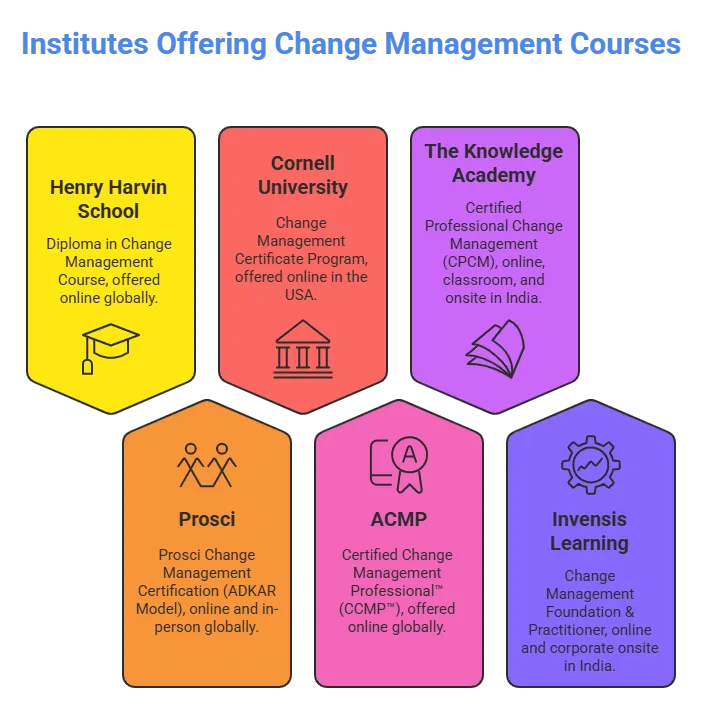
Why Henry Harvin For Change Management Course?

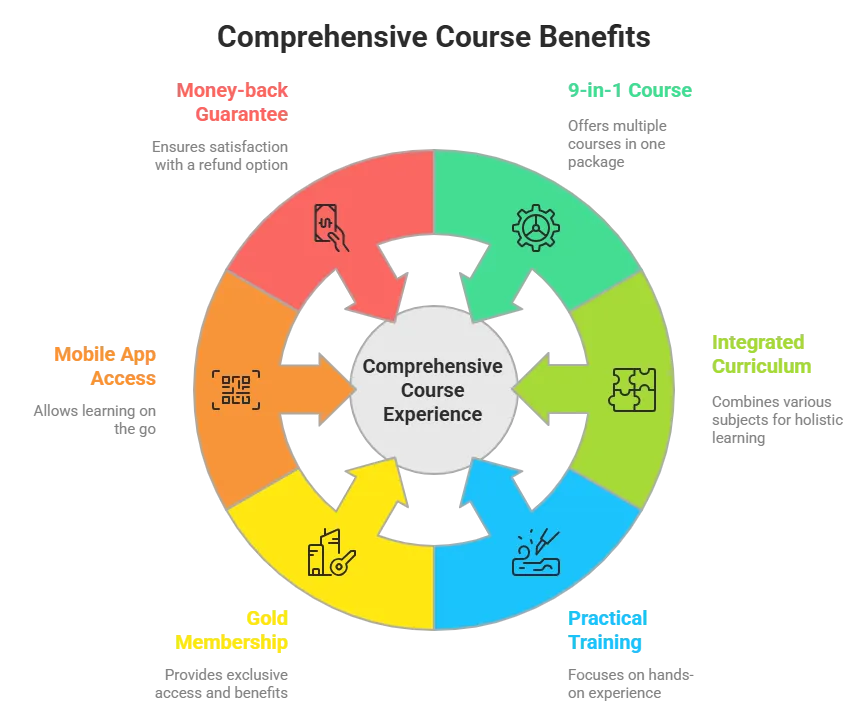
If you’re seeking high-quality learning and a significant career boost with the flexibility to study at your own pace, Henry Harvin offers an ideal solution. All their programs are delivered online, providing convenient self-paced learning options tailored to your schedule and comfort. You will find here both non-technical and Technical Courses from the foundation to the advanced level, to choose from. You can explore now or contact them for more details.
Conclusion:
Change Managers use structured approaches to link organizational goals with change activities while using performance metrics for assessment and following risk and governance protocols. The interview process for this role requires both knowledge of change management methodologies and frameworks, as well as practical interpersonal communication abilities. Employers want to recruit candidates who show flexibility and problem-solving abilities, together with excellent communication and leadership skills. The interview requires candidates to show their ability to engage stakeholders, handle resistance, and measure success through specific examples. Your answers to change manager interview questions should be clear, structured responses with authentic examples to make a lasting positive impression. The Change Manager’s core responsibilities of sustainable improvement, organizational growth, and team collaboration form the central focus of their work and the interview assessment process.
Recommended Reads:
- Top Benefits of ITIL Certification for IT Professionals
- TOP 10 ITIL Course in Bangalore in 2025
- 10 Reasons to Pursue ITIL Certification
- SIX SIGMA VS ITIL in 2025
- Top 10 ITIL Books For ITIL Foundation Exam
FAQs:
Ans: The Change Manager interview will ask competency-based and behavioural questions, as well as scenario-based questions. The evaluation process assesses your skills to lead transformation projects, handle resistance, and communicate effectively while ensuring change initiatives match organisational goals.
Ans: The interview will assess your understanding of ADKAR and Kotter’s 8-Step Model and Lewin’s Change Theory frameworks. Explain your practical experience with these frameworks through specific examples from your professional work.
Ans: A proper method to answer behavioural questions during Change Manager interviews involves using the STAR method (Situation, Task, Action, Result). Choose particular instances which prove your leadership skills by handling stakeholders and achieving quantifiable results.
Ans: The interviewer may want to know about your strategy for managing senior leadership opposition during change programs and your approach to saving a project that shows signs of failure. The assessment tests your adaptability through questions that require both strategic thinking and diplomatic abilities.
Ans: Show your achievements through metrics that include adoption statistics, employee engagement levels, cost reductions, and performance enhancement metrics. Your ability to monitor and maintain change progress throughout time will make you stand out to potential employers.